There are no items in your cart
Add More
Add More
| Item Details | Price | ||
|---|---|---|---|

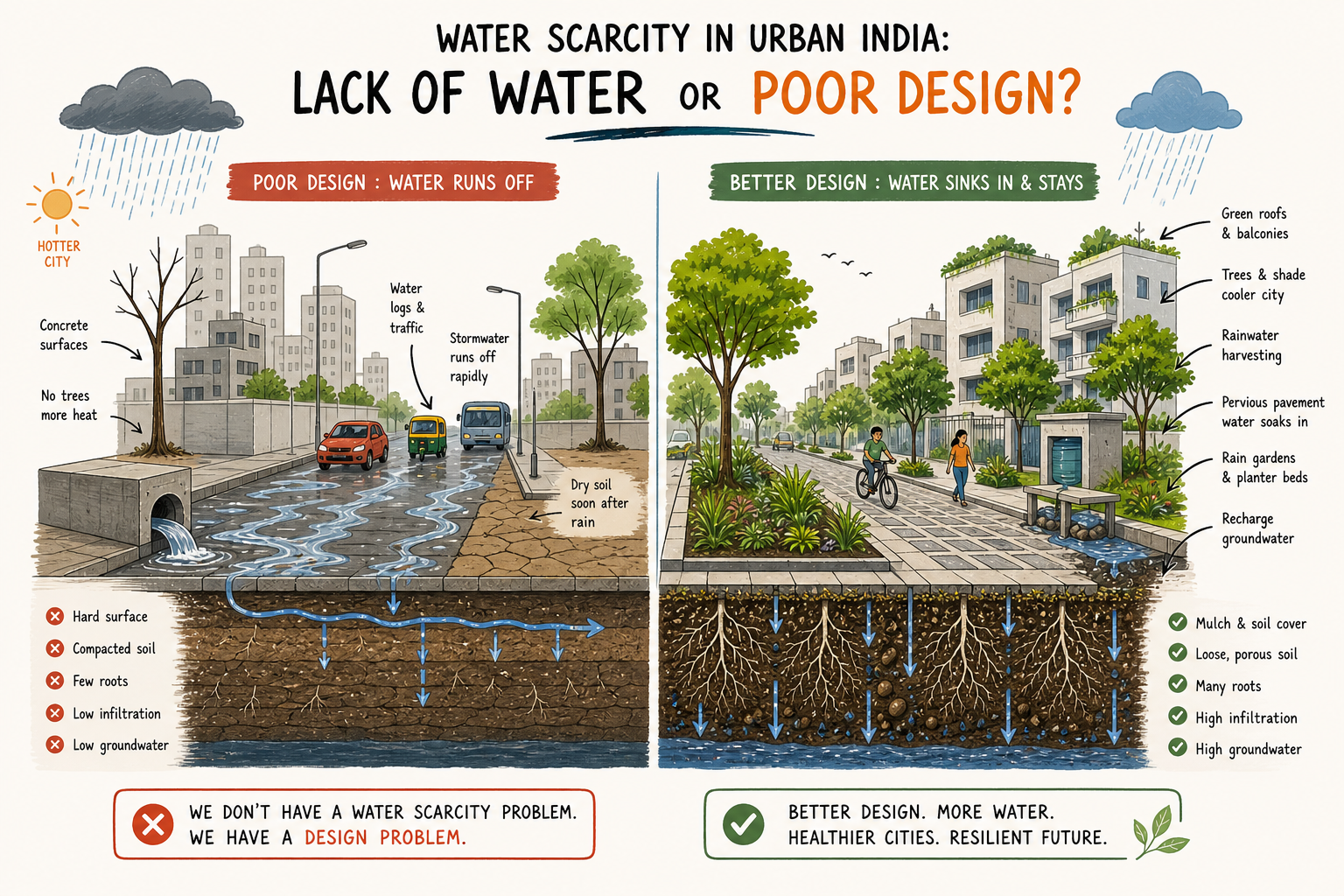
Water Scarcity in India: Is It Really Lack of Water or Poor Design?
Is the problem truly a lack of water, or is it the way we design systems to manage it?
Many effective solutions are surprisingly simple. They do not require large infrastructure or complex systems. They begin with small changes that improve how water interacts with soil and vegetation.
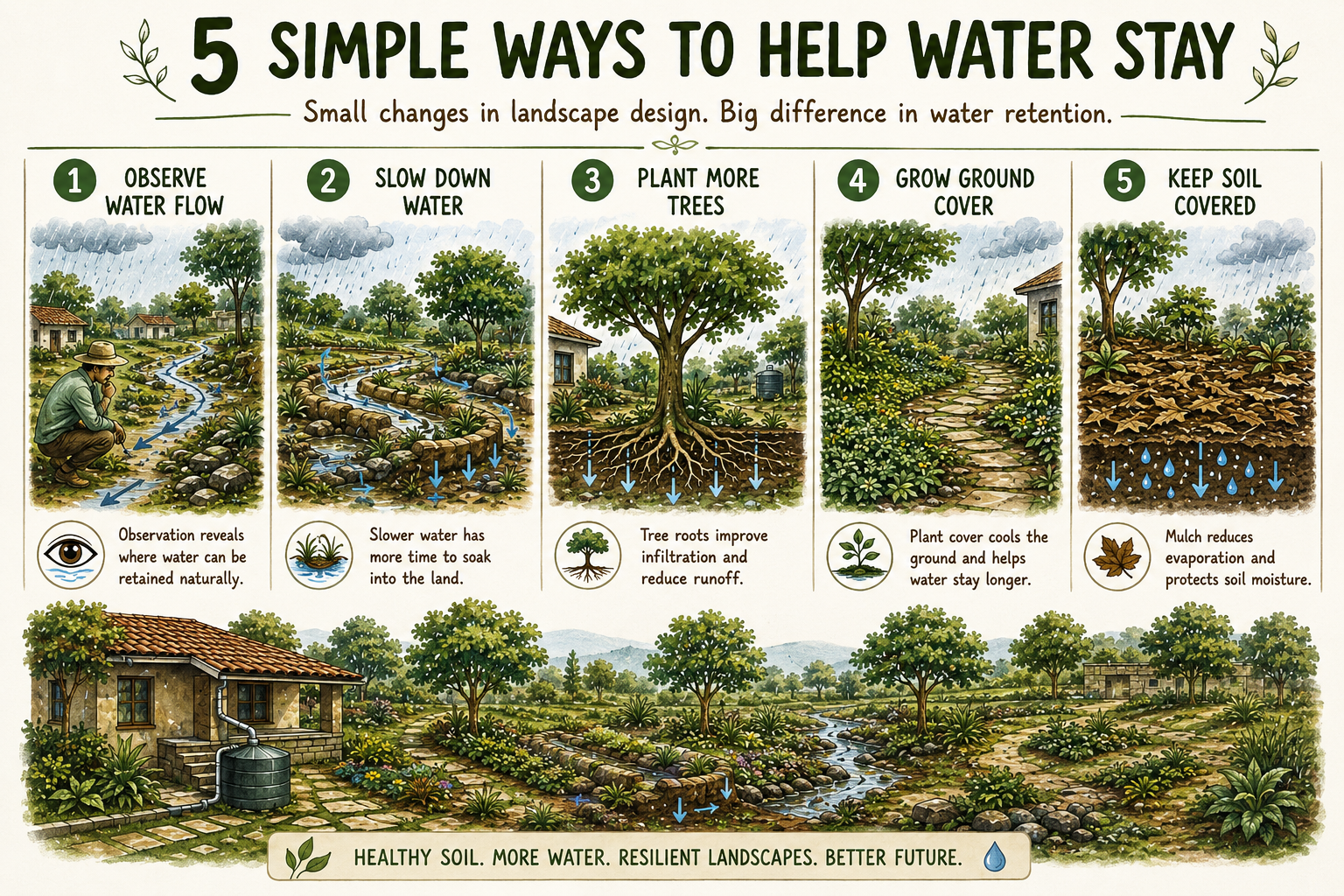
Keeping the soil covered is one of the most important steps. When soil is exposed, it heats up quickly and loses moisture. Covering it with organic material such as dry leaves or wood chips reduces evaporation and protects it from direct sunlight. Over time, this also improves soil structure.
Plant cover also plays a critical role. Introducing creepers, ground cover plants, or even small patches of vegetation helps reduce heat at the soil level. This creates a more stable microclimate and allows moisture to remain for longer periods.
Trees contribute in deeper ways. Their roots open up the soil, allowing water to move downward rather than across the surface. They also create shade, reduce wind impact, and continuously add organic matter back into the system.
Another useful step is simply observing how water moves. Every space has a natural flow pattern. Understanding where water collects and where it drains quickly can reveal opportunities for small interventions that improve absorption.
What Happens When Systems Improve
When these elements come together, the impact becomes visible over time.
This is not a quick fix. It is a gradual shift. Natural systems do not rely on constant input. They build capacity through relationships between elements.
Each step strengthens the next.
Across India, challenges such as water scarcity, soil degradation and rising temperatures are becoming more visible.
At the same time, there is a growing awareness that these issues cannot be solved through isolated interventions alone.
They require a more integrated way of thinking.
Whether it is a home garden, a piece of land, or a larger institutional space, the principle remains the same. Systems that work with natural processes tend to become more stable over time.
They reduce dependency, improve resilience, and create lasting impact.
You do not need large-scale changes to start.
Begin with observation. Notice what happens when it rains. Look at whether your soil is covered or exposed. Pay attention to how long moisture stays in the ground.
These small observations often lead to meaningful changes.